Many Richmond property owners start with a simple question: can I remove this tree? The answer depends on the tree, the property and the reason for removal. Richmond has tree-protection rules for many private-property trees, and some removals require a permit before any cutting begins.
Richmond Tree Trimming helps homeowners, strata properties, landlords and property managers understand the practical steps around a tree removal permit Richmond BC project. If your tree is dead, hazardous, in poor condition, affected by construction or located where it creates a serious property concern, the next step may involve measurement, photos, an arborist report or a formal city application.
Call 778-861-6366 or request a quote if you need help understanding the tree work and documentation that may be required.
Why Richmond Tree Permits Matter
Tree bylaws are designed to protect significant trees and manage urban canopy loss. For a property owner, that means tree removal is not always something that can be decided on the same day as the quote. A tree’s trunk diameter, health, location, species, site context and reason for removal can all matter.
In Richmond, the permit question is especially important because many neighbourhoods have mature residential trees, redevelopment activity, narrow lots, hedges, drainage constraints and established landscaping. Removing the wrong tree without the correct process can create delays, extra cost or enforcement problems.
A tree removal permit Richmond BC homeowner should think about early is not just a form. It can influence timing, quote scope, replacement planting and whether an arborist needs to assess the tree before work is scheduled.
When A Permit May Be Needed
A permit may be needed when a private-property tree meets Richmond’s protected-tree criteria. The city commonly looks at trunk diameter, property context and the reason for removal. Development work, construction access, dead or hazardous trees, nuisance roots, structural conflicts and disease can all involve different supporting details.
Situations that should be checked before cutting include:
- A large tree on private property.
- A tree near a proposed renovation, demolition or new build.
- A tree that may be dead, dangerous or structurally unsound.
- A tree affecting a driveway, foundation, retaining wall or utility service.
- A tree close to a property line.
- A tree that neighbours are concerned about.
- A removal request that may require replacement planting.
If the tree is small, recently planted or clearly outside the protected category, the process may be simpler. If you are unsure, get the tree assessed before removal begins.
Arborist Reports And Supporting Documentation
Some Richmond tree-removal situations need qualified arborist input. An arborist report can document the tree species, size, condition, defects, risk factors, site constraints and recommendation. That report may support a permit application, construction planning or a decision about whether pruning, retention or removal is appropriate.
An arborist report is often useful when the reason for removal is not obvious from a casual look. For example, a homeowner may see cracking pavement or roof overhang issues, while the city may need a clearer explanation of tree condition, risk, root conflict or structural impact.
If an arborist report is needed, the report should be prepared before final removal scheduling. That avoids guessing, prevents unnecessary delays and gives the property owner better documentation.
How Permit-Oriented Tree Work Is Planned
The best approach is to separate the decision process from the cutting process:
- Identify the tree and the reason for removal.
- Check whether Richmond permit rules may apply.
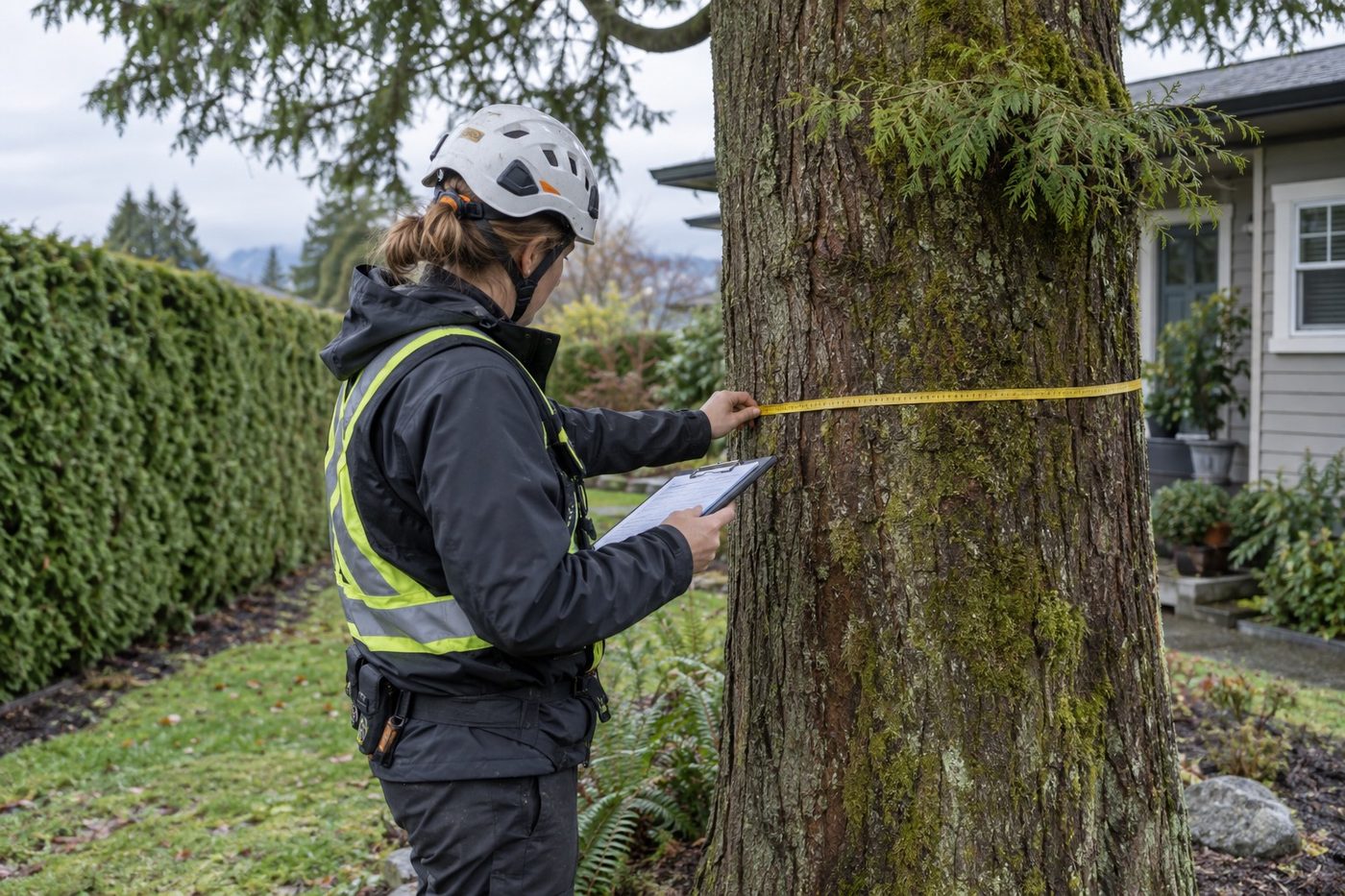
- Measure and photograph the tree where needed.
- Arrange an arborist assessment if the situation calls for it.
- Prepare or support the permit application.
- Wait for approval before removal where approval is required.
- Schedule removal, stump grinding and cleanup.
- Plan replacement planting if required.
This process can feel slower than simply hiring someone to cut the tree, but it protects the property owner and helps avoid doing work out of sequence.
Permit Help For Homeowners And Strata Properties
Homeowners often need help because they do not know whether their tree is protected. Strata councils and property managers may need more documentation because the decision affects shared property, insurance, budgets, residents and long-term maintenance.
Richmond Tree Trimming can help organize the practical side: what tree needs to be reviewed, what work is being considered, whether a report may be needed, and how removal or pruning can be planned after the city process is clear.
Request Help With A Richmond Tree Removal Permit
If you are dealing with a possible tree removal permit Richmond BC situation, call 778-861-6366 or send a quote request. Include your Richmond neighbourhood, the tree’s approximate size, why you want it removed and whether construction, safety or property damage is involved.
Richmond Tree Trimming can help you move from uncertainty to a clear next step, whether that means a site visit, arborist support, permit preparation, tree removal, stump grinding or pruning instead of removal.
For the main Richmond tree trimming and pruning service page, visit Richmond Tree Trimming.